Give a whole responsibility
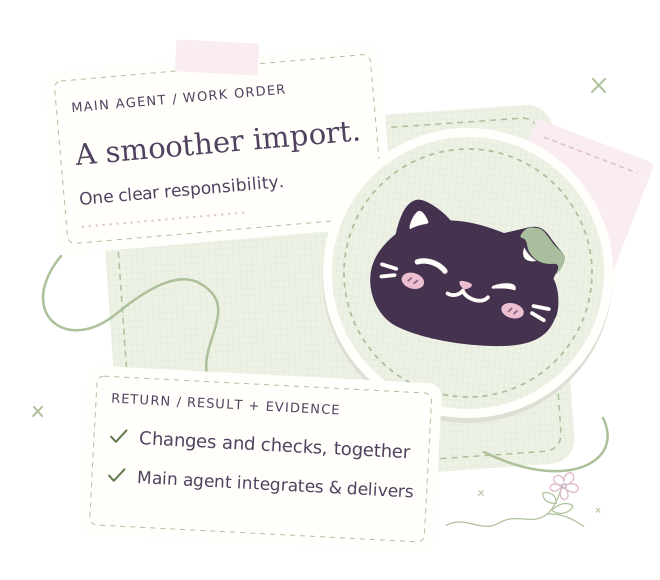
Let one worker investigate, implement and check its work. A clear work order names the outcome, the boundaries and the evidence to return.
A LITTLE HELP. ROOM TO BLOOM.
Hand a complete piece of work to a worker.
Keep the goal, the judgment, and the final delivery with your main agent.
Native Codex workers · Optional ACP · Local field notes
01 / A GOOD HANDOFF
Worker Routing is a lightweight, instruction-only Codex worker delegation plugin. It helps the main agent decide when to delegate, what to hand over, and how to bring the result back, without replacing the model you choose.
Let one worker investigate, implement and check its work. A clear work order names the outcome, the boundaries and the evidence to return.
Continue the same worker when a correction is needed. Small tasks can stay with the main agent. Say “solo” to keep the work there.
The main agent reviews the actual diff and checks, then integrates the result. A worker saying “done” is a handoff, not the final acceptance.
Use native Codex workers or an external ACP agent you have configured. Models, accounts and route choices stay yours.
Explore optional ACP02 / DISPATCH — LOCAL FIELD NOTES
Dispatch as usual; the receipts leave a trail. See totals in Home, find projects and their history in Sessions. No extra stamp after every task.
● Completed 22● Cancelled 2
September 1–7 · Full week42worker turns
Synthetic sample · Worker turns only
A TRAIL YOU CAN FOLLOW
Browse by Git repository or folder. Follow continuations and runtime records. Missing usage stays unknown.
Read the Dispatch guide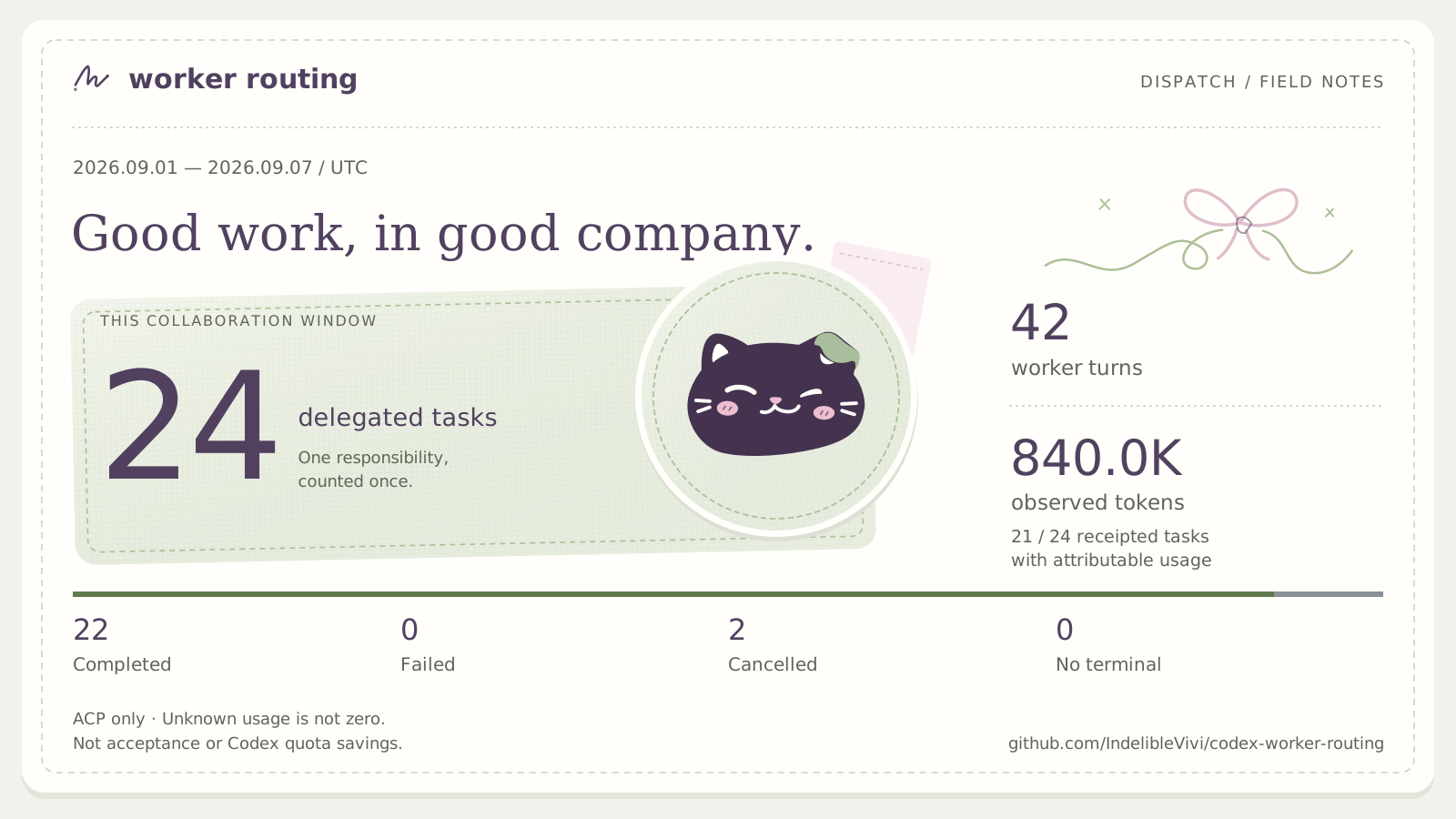
04 / YOUR FIRST HANDOFF
Open the repository in Codex and ask its built-in plugin-creator to install Worker Routing. Keep your current main model and provider configuration.
The first-delegation guide Open the GitHub repositoryInstall plugins/worker-routing from this repository into my personal marketplace. Keep my current main model and provider configuration. For updates, use a cachebuster and the normal reinstall flow.
Register the plugin, then start a new session to confirm it is loaded. ACP and the private-context SessionStart hook are separate, optional additions.
Installation, verification & recoveryA FEW THINGS, CLEARLY
From your first delegation to a card worth sharing. A little clarity on setup, access and where your data goes.
For native Codex workers, start with the routing plugin. External ACP routes and the SessionStart hook for loading private instructions are separate, optional additions you can configure when needed.
First-delegation guideNo. Delegate when a whole responsibility benefits from its own worker; small or nearly finished tasks can stay with the main agent. Say “solo” or “do not delegate” to keep the work there; corrections normally continue with the same worker.
Controlling delegationYou do. Worker Routing supplies no API keys, does not replace the main model and never falls back to a paid route without your authorization. An external ACP route receives the work order through your configured agent; actual access depends on host permissions and sandboxing, not on route configuration alone.
Optional ACP setupNew native workers do not copy the main conversation. The optional SessionStart hook loads private instructions before the first main-session request, without injecting them into children; host-shared engineering rules may still reach workers. This is an input boundary, not a filesystem sandbox.
Context boundariesCurrent statistics come from ACP receipts, not native Codex workers. Runtime completion is not engineering acceptance, and observed tokens describe known workload rather than Codex quota savings. Missing usage stays unknown instead of becoming zero.
How the statistics workExports contain aggregate totals, period, timezone and usage coverage, plus the slogan and credit you enter. They do not automatically include work orders, outputs, private route names, paths or internal IDs, and nothing uploads automatically. This website uses synthetic examples and does not connect to your local Dispatch or read receipts.
Sharing and exports